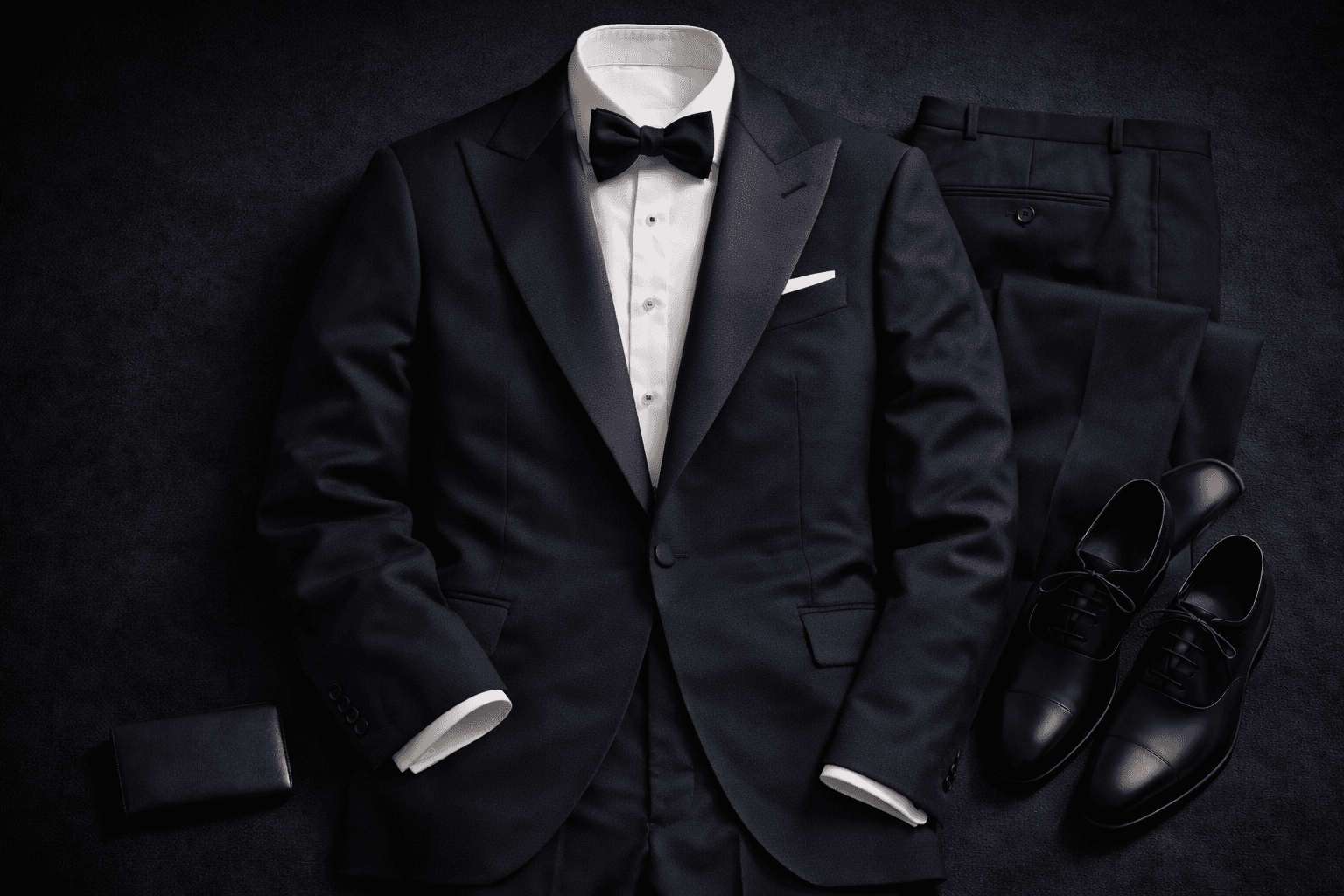
Tom Ford's appointment as James Bond's tailor in 2006 triggered the most significant shift in men's fashion since the peacock revolution of the 1960s. Over 15 years and five films, Ford transformed 007 from an Italian-suited playboy into a symbol of restrained British masculinity—and in doing so, redefined what the average man expected from a suit. The slim lapels, cropped jackets, and monochromatic palettes that now dominate British high streets trace directly back to Daniel Craig stepping out of the sea in those pale blue swimming trunks.
Before Ford: Bond's Italian Era
Understanding Tom Ford's impact requires understanding what came before. From GoldenEye (1995) through Die Another Day (2002), Pierce Brosnan's Bond wore Brioni—the Italian house synonymous with power dressing and generous cuts. These suits spoke a language of old money: wide lapels, padded shoulders, flowing silhouettes designed to suggest wealth rather than athleticism.
Brioni Bond was aspirational in an 80s and 90s sense. The suits cost £5,000+, looked expensive, and draped the body rather than sculpting it. This aesthetic worked within its era—but by 2006, it felt increasingly disconnected from how younger men wanted to present themselves.
The fashion landscape had shifted. Hedi Slimane at Dior Homme had introduced razor-thin tailoring to menswear. Thom Browne was shrinking proportions to the point of provocation. Men who'd grown up on indie rock and minimalist design didn't want to look like their fathers—they wanted suits that acknowledged the body beneath.
Enter Daniel Craig. And enter Tom Ford.
Casino Royale: The Revolution Begins
When Casino Royale premiered in November 2006, audiences immediately recognised something had changed. Craig's Bond was physical in a way previous iterations hadn't been—and his wardrobe emphasised rather than obscured that physicality. The suits were narrower, shorter, closer to the body. The shoulders followed his actual shoulder line rather than extending beyond it.
Tom Ford later explained his approach in interviews: he wanted Bond to look like a man who could actually fight, run, and move. The suits needed to suggest capability rather than mere wealth. This meant higher armholes for mobility, shorter jacket lengths for proportion, and fabrics with enough structure to hold their shape under action.
The numbers tell the story. Ford's Bond jackets measured approximately 2 inches shorter than Brioni's. Lapels narrowed from 3.5 inches to 2.5 inches. Trouser breaks disappeared entirely—Craig's hems grazed his shoe tops with no fabric pooling. Every proportion had been reconsidered.
The film's costume budget reportedly exceeded £1 million, with Craig wearing over 40 outfits across the runtime. But the impact extended far beyond cinema. Within 18 months of Casino Royale's release, searches for "slim fit suits" increased by 285% according to Google Trends data. British retailers scrambled to adjust their tailoring.
The Ripple Effect: High Street Transformation
Tom Ford suits retail at £3,500-5,500. Daniel Craig's exact screen-worn pieces were bespoke, pushing costs higher. Yet by 2010, nearly every British high street retailer had recut their entire suit offering to match the Bond silhouette.
Reiss was among the first to capitalise. The brand—already positioned as affordable premium—launched its "contemporary fit" suiting in 2007, explicitly referencing the slim, cropped proportions Ford had introduced. Their tailored jackets dropped to 27-28 inch lengths (from the traditional 30-31 inches), lapels narrowed, and trousers lost their pleats entirely.
Moss Bros, the stalwart of British occasion wear, overhauled their core range. M&S introduced "slim" and "skinny" fit options alongside their traditional cuts. Even Marks & Spencer's most conservative customers began requesting shorter jackets and narrower trousers.
The transformation wasn't limited to suits. Ford's Bond wore knitwear differently too—fitted rollnecks that showed the body's shape, fine-gauge polos tucked into high-waisted trousers. Brands like John Smedley, which had produced traditional British knitwear since 1784, suddenly found themselves positioned as essential components of modern masculine style.
AllSaints, founded in 1994 but reaching cultural prominence in the late 2000s, built their entire aesthetic around the Ford-Bond sensibility: slim, dark, minimalist, with an edge of danger. Their leather jackets and narrow tailoring attracted men who wanted the Craig energy without the Craig budget.
Skyfall: Peak Ford, Peak Influence
Skyfall (2012) represented the apex of Tom Ford's Bond influence. The film—directed by Sam Mendes with cinematography by Roger Deakins—treated Bond's wardrobe as integral to visual storytelling. The navy three-piece suit worn during the Shanghai sequences became one of the most requested looks in Savile Row history.
Costume designer Jany Temime collaborated with Ford on over 60 outfits for Craig, each designed to communicate character through cloth. The midnight blue dinner jacket that replaced traditional black signalled Bond's confidence in subverting convention. The grey windowpane suit worn during the parliamentary hearing conveyed establishment credibility. The Barbour jacket and N.Peal knitwear for the Scottish Highlands sequences rooted Bond firmly in British heritage.
This was strategic casting through costume. Temime later explained that every fabric choice was deliberate—British wools, Scottish cashmere, English shirting. After two decades of Italian-dressed Bonds, Skyfall reclaimed 007 as a British cultural export.
The fashion industry responded accordingly. British brands that had seemed unfashionable suddenly became essential. Barbour—a country outfitter since 1894—saw urban sales increase by 43% in the year following Skyfall's release. N.Peal, the cashmere specialist that had dressed Bond in a £300 rollneck, reported their waiting list reached six months for the specific shade Craig wore.
The Democratisation of Bond Style
Tom Ford's genius—beyond the clothes themselves—was creating a look that could be approximated at every price point. The proportions he established were replicable; the silhouette didn't depend on £5,000 fabrics. A man spending £300 at Reiss could achieve 80% of the effect Craig projected on screen.
This democratisation transformed menswear retail. Where previous Bond eras created aspiration without accessibility (few men could afford Brioni, or would know where to buy it), Ford-era Bond provided a template anyone could follow:
The proportions: Jacket length hitting mid-fly, narrow lapels, minimal break on trousers. These details cost nothing extra to implement—they're simply a different cut.
The colour palette: Navy, charcoal, black, white, pale blue. No patterns more complex than subtle windowpane or herringbone. This restraint made building a Bond wardrobe straightforward at any budget.
The fit philosophy: Close to the body without being tight. Room to move, but nothing excess. This required better understanding of one's own measurements, but not more money.
The accessory minimalism: One good watch. No visible jewellery. Plain leather belts and shoes. Restraint that actually reduced costs compared to flashier alternatives.
Flash Fashion Club monitors the UK brands that best translate Ford's Bond aesthetic: Reiss for tailoring, AllSaints for leather and casual wear, John Smedley and N.Peal for knitwear, Charles Tyrwhitt and Turnbull & Asser for shirting. During seasonal sales, a complete Ford-Bond silhouette—suit, knitwear, shirts, accessories—becomes achievable for under £600.
The Technical Revolution: What Ford Actually Changed
Beyond aesthetics, Ford introduced technical innovations that filtered through the entire industry:
Higher armholes: Traditional British tailoring cut armholes low for comfort; Ford raised them significantly, allowing greater arm mobility while keeping the jacket body close. This change—invisible to most observers—transformed how suits feel to wear. Today, even M&S's entry-level suits feature higher armholes than their 2005 equivalents.
Natural shoulders: Ford rejected the padded, extended shoulders of 80s and 90s power dressing. His Bond suits followed the wearer's actual shoulder line, creating a cleaner silhouette. This influenced everything from workplace dress codes to wedding suit expectations.
Half-canvas construction: While Ford's own suits use full canvas (floating fabric layers that mould to the body), his proportions work equally well with half-canvas construction—the standard at premium high street level. This meant the look could scale down without falling apart.
Button stance: Ford raised the buttoning point on his jackets, creating a longer lapel line and more V-shaped torso effect. This single change makes suits appear more dynamic and modern, regardless of price point.
Understanding these technical elements explains why "buying slim" isn't enough. Many fast-fashion brands produced slim suits that looked cheap because they ignored armhole height or canvas construction. The British brands that successfully captured Ford's energy—Reiss, Suitsupply, select M&S lines—did so by replicating his technical approach, not just his measurements.
Beyond Ford: The Evolution Continues
No Time to Die (2021) marked Daniel Craig's final Bond film—and a subtle evolution in the wardrobe philosophy. While Tom Ford remained involved, costume designer Suttirat Anne Larlarb introduced more casual elements: the now-iconic N.Peal rollneck, military-inspired outerwear, a general softening from boardroom to field agent.
This shift reflected changing attitudes toward formalwear. The men who adopted Ford-Bond tailoring in 2008 now worked in offices where suits were optional. The aesthetic needed to translate to a world where knitwear and outerwear carried more weight than jacket lapels.
The brands positioned for this evolution—N.Peal, Barbour, John Smedley—benefited accordingly. The Bond wardrobe became less about suits specifically and more about the underlying principles: quality fabrics, precise fit, restrained colour, British heritage. These translate regardless of whether you're wearing tailoring or a rollneck with chinos.
Flash Fashion Club's monitoring reflects this shift. While Reiss and AllSaints remain core, the past three years show increased alerts for knitwear brands—N.Peal, John Smedley—and outerwear specialists like Barbour and Private White V.C. Bond style is evolving, and the accessible entry points are evolving with it.
The Legacy: What Ford Taught Us
Tom Ford's 15-year Bond tenure taught British men several lessons that extend beyond which suit to buy:
Fit matters more than price. A £300 suit that fits perfectly communicates more confidence than a £3,000 suit that doesn't. Ford's proportions work at any budget—but only if you know your measurements and insist on tailoring.
Restraint reads as expensive. Bond's colour palette is deliberately narrow. His accessories are minimal. This restraint creates an impression of considered wealth rather than flash—and it's infinitely more achievable than logo-heavy alternatives.
British heritage has contemporary relevance. Ford reframed brands like Barbour, N.Peal, and Turnbull & Asser as fashion-forward rather than fusty. Men who'd dismissed these labels as their grandfather's clothing discovered they were exactly what modern masculine style required.
Investment pieces compound. The Ford-Bond wardrobe isn't trend-driven—which means pieces purchased in 2010 remain relevant in 2026. A Barbour jacket from Skyfall's era still works; an N.Peal rollneck hasn't dated. This longevity justifies premium pricing, especially when purchased at seasonal discounts.
Building Ford-Bond Style on a Real Budget
The Ford aesthetic is achievable for approximately £800-1,200 at retail, or £400-600 during seasonal sales. This table maps Ford's screen-worn pieces to accessible alternatives:
| Ford Original | Screen Appearance | Accessible Alternative | Sale Price | |--------------|-------------------|----------------------|------------| | Navy two-piece suit (£4,200) | Casino Royale, Skyfall | Reiss Tailored Fit (£400) | £160-200 | | White cotton shirt (£450) | Throughout | Charles Tyrwhitt (£60) | £30-40 | | Cashmere rollneck (£890) | Spectre, No Time to Die | N.Peal (£350) | £140-180 | | Merino polo (£490) | Casino Royale | John Smedley (£165) | £80-100 | | Field jacket (£2,100) | Skyfall | Barbour Beacon (£299) | £150-180 | | Leather gloves (£380) | Throughout | Dents (£95) | £50-65 | | Total | | £1,369 | £610-765 |
Flash Fashion Club monitors all six alternative brands, alerting members when pieces reach 40%+ discount thresholds.
Frequently Asked Questions
Did Tom Ford design all of Daniel Craig's Bond suits?
Tom Ford served as the primary tailor for Daniel Craig's Bond across all five films (2006-2021), though costume designers collaborated on the overall wardrobe vision. Ford provided the suits, dinner jackets, and formal wear, while other brands supplied casualwear, knitwear (N.Peal, John Smedley), and outerwear (Barbour). Ford's influence extended beyond his own pieces—his proportions and colour philosophy shaped the entire wardrobe approach.
How much do Tom Ford Bond suits cost?
Tom Ford ready-to-wear suits retail at £3,500-5,500, while made-to-measure options start around £4,500. The bespoke pieces created specifically for the Bond films are not available for public purchase. However, Ford's silhouette—slim, cropped, natural shoulders—can be achieved through brands like Reiss (£300-500), Suitsupply (£400-700), or made-to-measure services at comparable prices.
Which Bond film has the best fashion?
Skyfall (2012) is widely considered the pinnacle of Bond fashion, with costume designer Jany Temime and Tom Ford creating over 60 outfits that integrated seamlessly with Sam Mendes' visual storytelling. The navy three-piece suit, Barbour field jacket, and N.Peal knitwear from this film remain the most requested Bond looks. GQ's 2022 reader poll ranked Skyfall as the best-dressed Bond film by a significant margin.
What brands does James Bond actually wear?
Daniel Craig's Bond wore Tom Ford for suits and formal wear, N.Peal for cashmere knitwear, John Smedley for merino pieces, Barbour for outerwear, Turnbull & Asser and Tom Ford for shirts, Dents for leather gloves, Crockett & Jones for shoes, and Omega for watches. Flash Fashion Club monitors five of these brands—N.Peal, John Smedley, Barbour, Turnbull & Asser, and Dents—alerting members when prices reach significant discounts.
How did Tom Ford change men's fashion?
Tom Ford's Bond tenure (2006-2021) mainstreamed slim tailoring, raised armholes, natural shoulders, and minimal colour palettes. Before Craig's Casino Royale, slim suits were avant-garde; within five years, they were default. British high street retailers—Reiss, M&S, Moss Bros—restructured their entire suit offerings to match Ford's proportions. The influence extended beyond tailoring to establish a philosophy: fit over price, restraint over flash, quality over quantity.
The Ford-Bond Aesthetic Starts Here
Flash Fashion Club monitors Reiss, AllSaints, N.Peal, John Smedley, Barbour, and Turnbull & Asser alongside 29 premium UK brands, alerting you when Tom Ford alternatives reach discount thresholds—typically 40-60% off retail pricing.
How it works:
- Get alerts for brands that captured the Ford-Bond aesthetic
- Email notifications when quality pieces hit sales
- Instant Telegram alerts for Premium members
- Build the look that revolutionised menswear at sale prices
The silhouette that revolutionised menswear is one alert away.
Already a member? View your dashboard
Join 5,000+ members building considered wardrobes at intelligent prices.